The Enterprise Attention Problem: Using AI to Surface What Matters
July 31, 2026
Information Abundance Has Become an Operational Problem
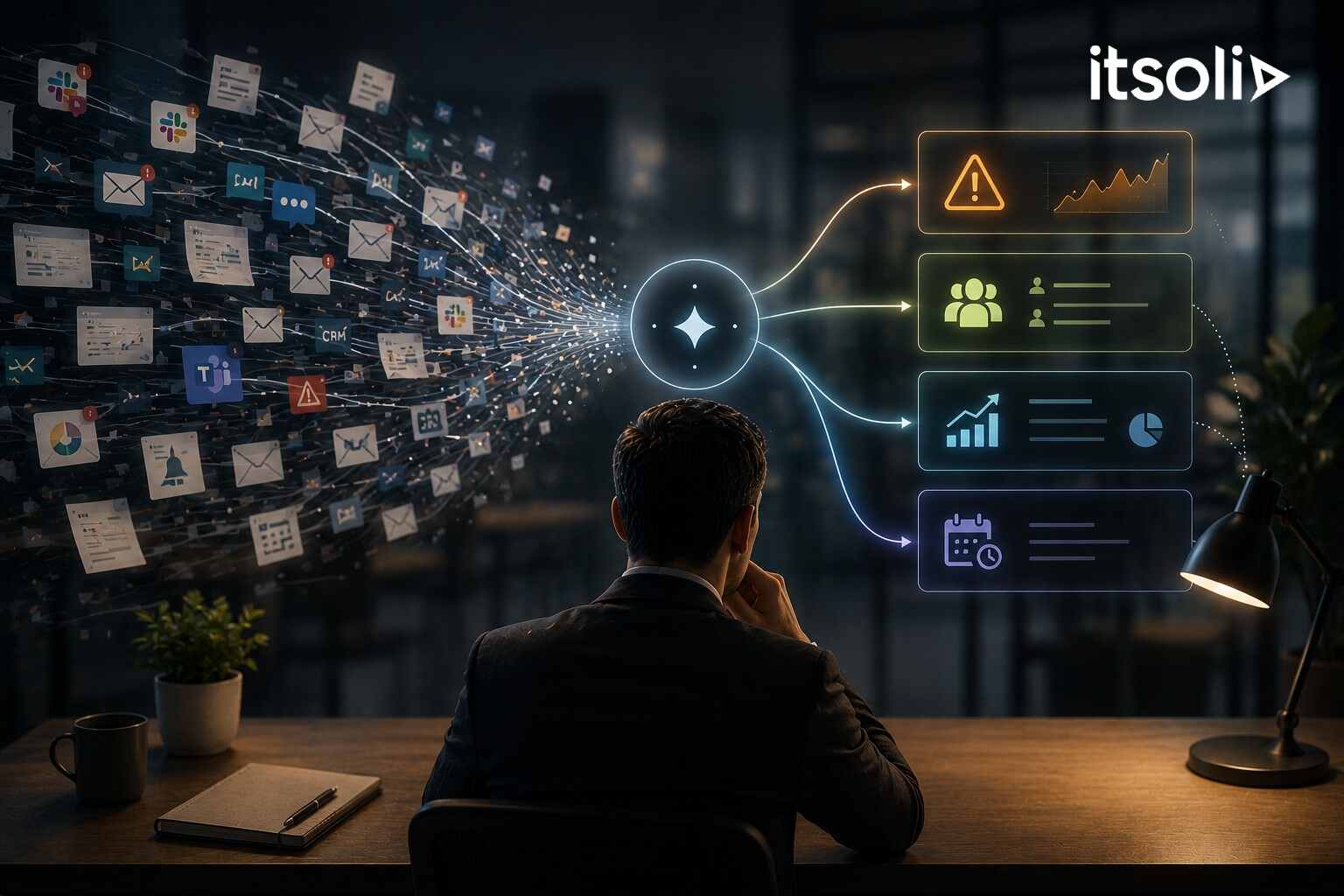
Modern enterprises do not suffer from lack of information. They suffer from too much of it.
Employees receive emails, dashboards, Slack messages, Teams notifications, CRM updates, project alerts, reports, meeting summaries, support tickets, and system warnings. Leaders are surrounded by data, but still struggle to identify what requires attention.
This is the enterprise attention problem.
The issue is not visibility. The issue is prioritization.
When everything is visible, nothing is clear. AI offers a way to solve this problem by helping organizations surface what matters, when it matters, and to the right person.
Dashboard Fatigue Is Real
Dashboards were supposed to make organizations more informed. In many cases, they created a new burden.
Users must interpret charts, compare trends, identify anomalies, decide what matters, and determine what action to take. This requires time and attention that many teams do not have.
As dashboard volume grows, engagement often declines. People stop checking. Alerts are ignored. Reports are skimmed. Important signals are missed.
The problem is not that dashboards are useless. The problem is that dashboards ask humans to do too much cognitive filtering. AI can reduce this burden.
From Visibility to Prioritization
The next generation of enterprise intelligence will not simply show more data. It will prioritize.
Instead of presenting 40 metrics, AI can identify the three changes that matter most. Instead of showing every support ticket, AI can highlight the cases most likely to escalate. Instead of listing all sales opportunities, AI can rank the accounts where action today may change the outcome.
This shift is subtle but powerful.
Visibility answers: What is happening?
Prioritization answers: What needs attention?
That is the question most business users actually care about.
What AI Can Detect
AI can help identify patterns that humans may miss, especially across large volumes of information.
It can detect anomalies, emerging risks, repeated customer complaints, declining engagement, process bottlenecks, delayed approvals, forecast deviations, sentiment shifts, unusual financial activity, and operational dependencies.
More importantly, it can connect signals across systems.
A delayed shipment, negative customer email, and high-value account renewal may appear unrelated in separate tools. AI can connect them and alert the account owner that intervention is needed.
This is where AI becomes an attention engine.
The Risk of Bad Prioritization
AI-powered prioritization must be designed carefully.
If the system surfaces too many alerts, users will ignore it. If it surfaces the wrong alerts, users will lose trust. If it hides important context, users may make poor decisions.
The goal is not to automate attention blindly. The goal is to improve signal quality.
This requires clear prioritization logic, confidence indicators, user feedback, personalization by role, explainability, and continuous tuning.
Attention systems must learn what each user, team, or function considers important.
Role-Based Intelligence
Different roles need different signals.
A CEO may need strategic risks, revenue movements, and major customer issues. A sales manager may need deal risk, rep performance, and account engagement. A finance controller may need anomalies, cash flow changes, and policy exceptions. A customer service lead may need escalation trends, response delays, and sentiment shifts.
AI attention systems should not treat all users equally. They should tailor intelligence to responsibility.
This makes information more relevant and reduces noise.
Designing AI Attention Systems
An effective AI attention system should have several design principles.
First, it should be action-oriented. Every alert or recommendation should suggest what can be done next.
Second, it should be explainable. Users should understand why something was surfaced.
Third, it should be adjustable. Users should be able to tune what matters to them.
Fourth, it should be integrated. The insight should appear inside the workflow, not in a separate tool.
Fifth, it should learn from feedback. If users dismiss certain alerts repeatedly, the system should adapt.
These principles help prevent AI from becoming another source of noise.
From Alerts to Intelligence Briefings
The future of enterprise attention may not be alerts at all. It may be intelligent briefings.
Instead of receiving hundreds of notifications, users may receive a concise summary: what changed, why it matters, what the likely impact is, what action is recommended, and who should be involved.
This moves AI from monitoring to advisory support.
For leaders, this can be especially powerful. An executive intelligence briefing can synthesize signals from sales, finance, operations, customers, and market data into a practical view of what needs attention.
The Human Element
Attention is not purely technical. It is deeply human.
People ignore systems that do not respect their context. They resist tools that feel controlling. They distrust recommendations that cannot be explained.
AI attention systems must be designed with empathy. They should support judgment, not replace it. They should reduce cognitive load, not increase it. They should help users feel more in control, not less.
The best systems act like skilled advisors. They do not shout. They guide.
The Strategic Impact
Organizations that manage attention better will move faster. They will respond to risk earlier, act on opportunities sooner, and reduce wasted time spent sorting through noise.
In a world where every function is overloaded, attention becomes a scarce enterprise resource. AI can help allocate that resource more intelligently.
The goal is not more information. The goal is better focus.

© 2026 ITSoli

