
Enterprises needed a place to store large volumes of structured and unstructured data without forcing everything into rigid schemas. The data lake offered flexibility, lower storage cost, and the promise of future analytics. But many data lakes became difficult to use. They accumulated information faster than organizations could organize it. Data quality varied. Metadata was… Continue reading From Data Lakes to Intelligence Lakes: The Evolution of Enterprise Information Architecture
Author: IT Soli
Context Engineering: The Next Competitive Advantage After Prompt Engineering
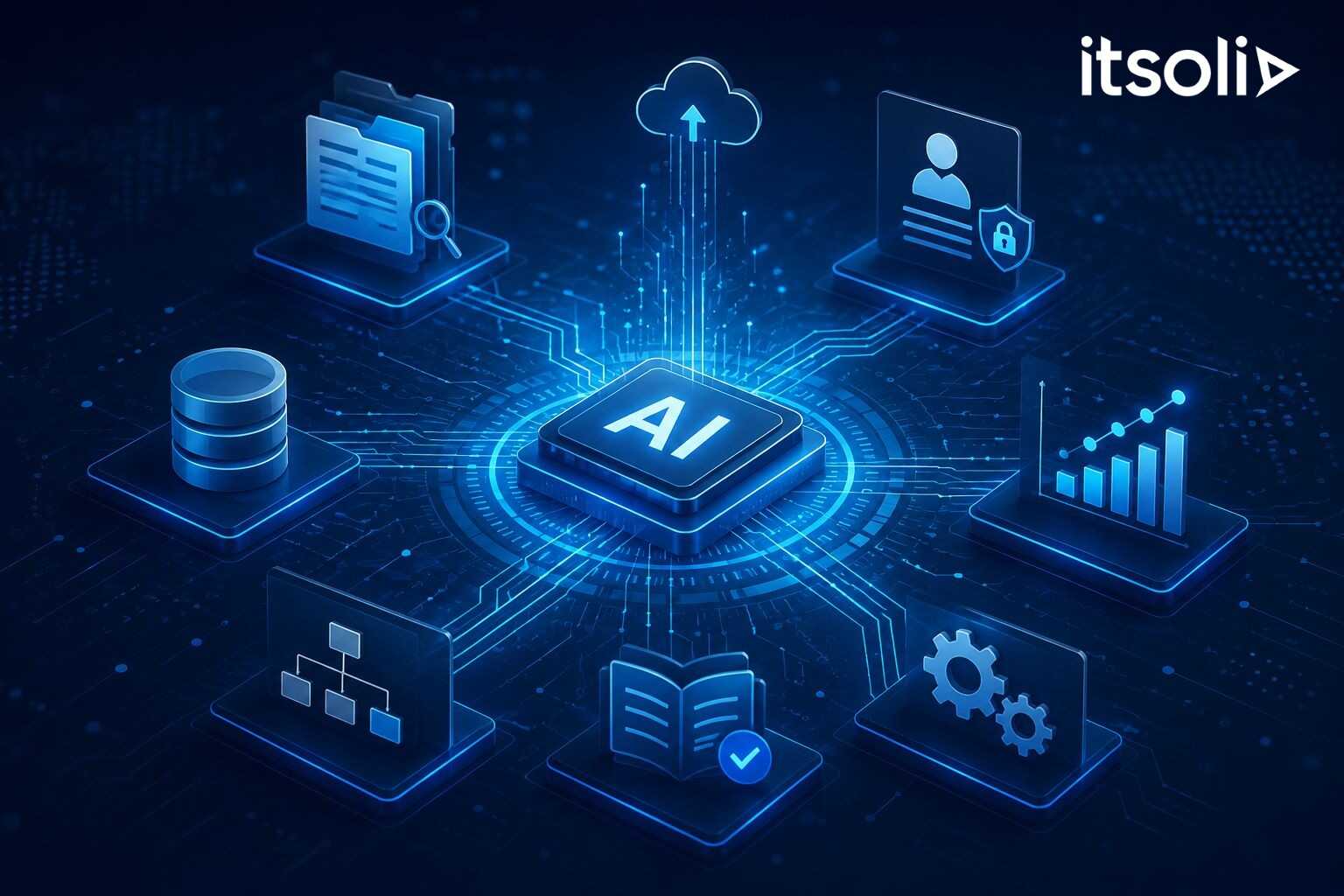
Prompt engineering helped enterprises understand that model behavior can be shaped through better instructions. Teams learned to define roles, provide examples, specify formats, and create reusable templates. But prompts alone are no longer enough. The quality of enterprise AI increasingly depends on context engineering. Context engineering is the discipline of deciding what information a model… Continue reading Context Engineering: The Next Competitive Advantage After Prompt Engineering
The AI Operating Model: Building Organizations That Can Scale Intelligence

AI adoption often begins with isolated experiments. A business unit tests a chatbot. A data team builds a predictive model. An operations group automates a manual task. Each effort may create local value, but the enterprise still struggles to scale. The problem is not a shortage of ideas. It is the absence of an operating… Continue reading The AI Operating Model: Building Organizations That Can Scale Intelligence
Why Enterprise AI Fails Without Process Intelligence

Enterprise AI programs often begin with a model, a platform, or a list of use cases. Teams evaluate vendors, compare capabilities, and launch pilots. Yet many of these initiatives struggle to create lasting value because they overlook a more fundamental question: How does work actually move through the organization? Without a clear understanding of real… Continue reading Why Enterprise AI Fails Without Process Intelligence
From Digital Transformation to Intelligence Transformation

Digital Transformation Was Only the First Step For the past two decades, enterprises have pursued digital transformation. They moved processes online, adopted cloud platforms, digitized customer interactions, implemented ERP and CRM systems, and invested in analytics. These efforts created important foundations. But digitization alone does not make an organization intelligent. A digital process can still… Continue reading From Digital Transformation to Intelligence Transformation
The Enterprise Attention Problem: Using AI to Surface What Matters

Information Abundance Has Become an Operational Problem Modern enterprises do not suffer from lack of information. They suffer from too much of it. Employees receive emails, dashboards, Slack messages, Teams notifications, CRM updates, project alerts, reports, meeting summaries, support tickets, and system warnings. Leaders are surrounded by data, but still struggle to identify what requires… Continue reading The Enterprise Attention Problem: Using AI to Surface What Matters
Enterprise AI Architecture in 2027: What Modern Organizations Will Look Like

The AI Stack Is Becoming the Operating Model By 2027, enterprise AI will no longer be treated as a set of isolated tools. It will become part of the operating model of the business. Today, many organizations still think of AI in terms of projects: a chatbot here, a forecasting model there, an automation pilot… Continue reading Enterprise AI Architecture in 2027: What Modern Organizations Will Look Like
Why AI Projects Need Product Management More Than Data Science

Models Do Not Manage Themselves Into Value AI projects often begin with data science. A team identifies a dataset, selects a model, evaluates performance, and demonstrates a promising result. The work is important, but it is not enough. A model does not become valuable simply because it is accurate. It becomes valuable when it solves… Continue reading Why AI Projects Need Product Management More Than Data Science
The Hidden Economics of AI: Understanding Total Cost Beyond Model Licensing

Model Pricing Is Only the Visible Cost When organizations evaluate AI investments, they often begin with model licensing or API pricing. They compare token rates, subscription tiers, cloud usage, or platform fees. These numbers are visible, easy to discuss, and simple to include in a budget. But they represent only a fraction of the true… Continue reading The Hidden Economics of AI: Understanding Total Cost Beyond Model Licensing
Building Enterprise Memory: Turning Every Project Into Organizational Intelligence

Most Organizations Forget Too Much Every project teaches an organization something. A failed implementation reveals hidden constraints. A successful rollout creates reusable patterns. A difficult client engagement exposes risks. A product launch produces lessons about timing, messaging, and operations. Yet much of this learning disappears. It remains in email threads, meeting notes, slide decks, chat… Continue reading Building Enterprise Memory: Turning Every Project Into Organizational Intelligence
© 2026 ITSoli

