
Leaders measure time saved, tasks automated, or output volume increased. These are useful indicators, but they do not capture the full impact of AI transformation. A team may create reports faster without making better decisions. A chatbot may handle more conversations while customer satisfaction falls. A model may reduce manual work but introduce new review… Continue reading AI Transformation Metrics: Measuring Business Value Beyond Productivity
Author: IT Soli
From Data Lakes to Intelligence Lakes: The Evolution of Enterprise Information Architecture

Enterprises needed a place to store large volumes of structured and unstructured data without forcing everything into rigid schemas. The data lake offered flexibility, lower storage cost, and the promise of future analytics. But many data lakes became difficult to use. They accumulated information faster than organizations could organize it. Data quality varied. Metadata was… Continue reading From Data Lakes to Intelligence Lakes: The Evolution of Enterprise Information Architecture
Context Engineering: The Next Competitive Advantage After Prompt Engineering

Prompt engineering helped enterprises understand that model behavior can be shaped through better instructions. Teams learned to define roles, provide examples, specify formats, and create reusable templates. But prompts alone are no longer enough. The quality of enterprise AI increasingly depends on context engineering. Context engineering is the discipline of deciding what information a model… Continue reading Context Engineering: The Next Competitive Advantage After Prompt Engineering
The AI Operating Model: Building Organizations That Can Scale Intelligence

AI adoption often begins with isolated experiments. A business unit tests a chatbot. A data team builds a predictive model. An operations group automates a manual task. Each effort may create local value, but the enterprise still struggles to scale. The problem is not a shortage of ideas. It is the absence of an operating… Continue reading The AI Operating Model: Building Organizations That Can Scale Intelligence
Building an Enterprise Intelligence Platform: Connecting Data, Knowledge, Decisions, and Automation

One team builds a chatbot. Another develops a model. Another creates a document search tool. Another automates a workflow. Each solution may work. Together, they create complexity. An enterprise intelligence platform provides a common foundation that connects data, knowledge, models, decisions, and automation. It helps the organization scale AI without rebuilding the same capabilities repeatedly.… Continue reading Building an Enterprise Intelligence Platform: Connecting Data, Knowledge, Decisions, and Automation
The Rise of AI-Native Enterprises: Characteristics of the Next Generation Organization

Far fewer are AI-native. An AI-native enterprise does not simply add tools to existing processes. It redesigns how the organization learns, decides, and operates. AI becomes part of the business architecture. This does not mean humans disappear. It means intelligence is embedded across workflows, systems, and roles. AI-Native Starts With Operating Model An AI-native enterprise… Continue reading The Rise of AI-Native Enterprises: Characteristics of the Next Generation Organization
Enterprise AI Security: Protecting Knowledge, Models, and Decision Systems

Traditional security focused on networks, applications, identities, and data. AI adds new assets: Models Prompts Embeddings Knowledge bases Agent tools Training data Decision logs Evaluation datasets These assets can be manipulated, stolen, exposed, or misused. AI security therefore requires more than applying existing controls to new tools. It requires a broader security model. Data Leakage… Continue reading Enterprise AI Security: Protecting Knowledge, Models, and Decision Systems
The Future of Business Applications: How AI Will Redefine ERP, CRM, and Enterprise Platforms

ERP systems store transactions. CRM platforms manage customer activity. HR systems track employees. Service platforms manage tickets. These systems are essential, but they are largely reactive. Users enter data. Rules process it. Reports summarize it. AI is changing this model. Business applications are evolving from systems of record into systems of intelligence. They will not… Continue reading The Future of Business Applications: How AI Will Redefine ERP, CRM, and Enterprise Platforms
Designing Trustworthy Enterprise AI: Why Explainability Drives Adoption
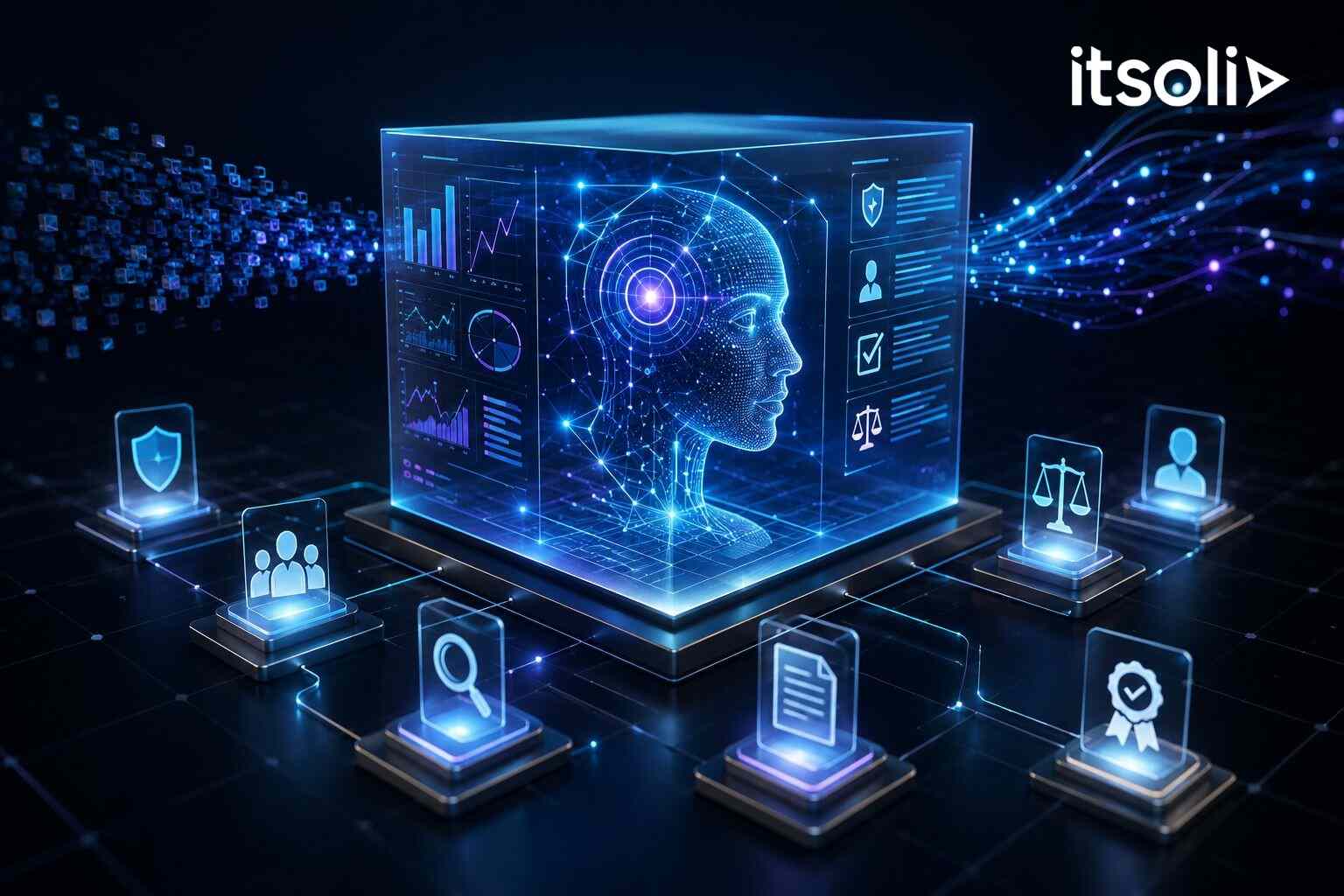
Employees need confidence in recommendations. Leaders need confidence in business impact. Risk teams need confidence in control. Customers need confidence that decisions are fair and responsible. Trust does not come from model accuracy alone. It comes from understanding. When users cannot understand why AI produced an output, they hesitate. They verify manually, ignore recommendations, or… Continue reading Designing Trustworthy Enterprise AI: Why Explainability Drives Adoption
AI Transformation Metrics: Measuring Business Value Beyond Productivity

Leaders measure time saved, tasks automated, or output volume increased. These are useful indicators, but they do not capture the full impact of AI transformation. A team may create reports faster without making better decisions. A chatbot may handle more conversations while customer satisfaction falls. A model may reduce manual work but introduce new review… Continue reading AI Transformation Metrics: Measuring Business Value Beyond Productivity
© 2026 ITSoli

